
Find People in Cook County
Cook County people search starts with knowing which office holds the records you need. More than 5.2 million people live in Cook County, making it the second most populous county in the whole United States. The county seat is Chicago. Multiple agencies keep public records here, from the Circuit Court Clerk to the County Clerk and the Sheriff's Office. Court records, vital records, property files, and inmate data are all searchable through Cook County offices. Each agency has its own search tools and fee schedules, and many records are free to look up online.
Cook County Quick Facts
Cook County People Search Resources
Cook County runs the second largest unified court system in the nation. The Circuit Court Clerk, Iris Y. Martinez, keeps case files at the Richard J. Daley Center in downtown Chicago. This office handles about 2.4 million cases each year across 13 court divisions. That is a huge volume of records, and all of them tie back to real people. If you want to find someone through court records in Cook County, the clerk's office is the place to start.
You can search case records at the clerk's website for free. Type a name and see if any cases come up. The system shows civil, criminal, family, and traffic cases. Each result lists the case number, filing date, parties, and case status. For a deeper look, you can pull up individual filings within a case. This is one of the most useful tools for a people search in Cook County.
Visit the Cook County Circuit Court Clerk site to run a name search. Results load fast. You do not need an account for basic lookups.
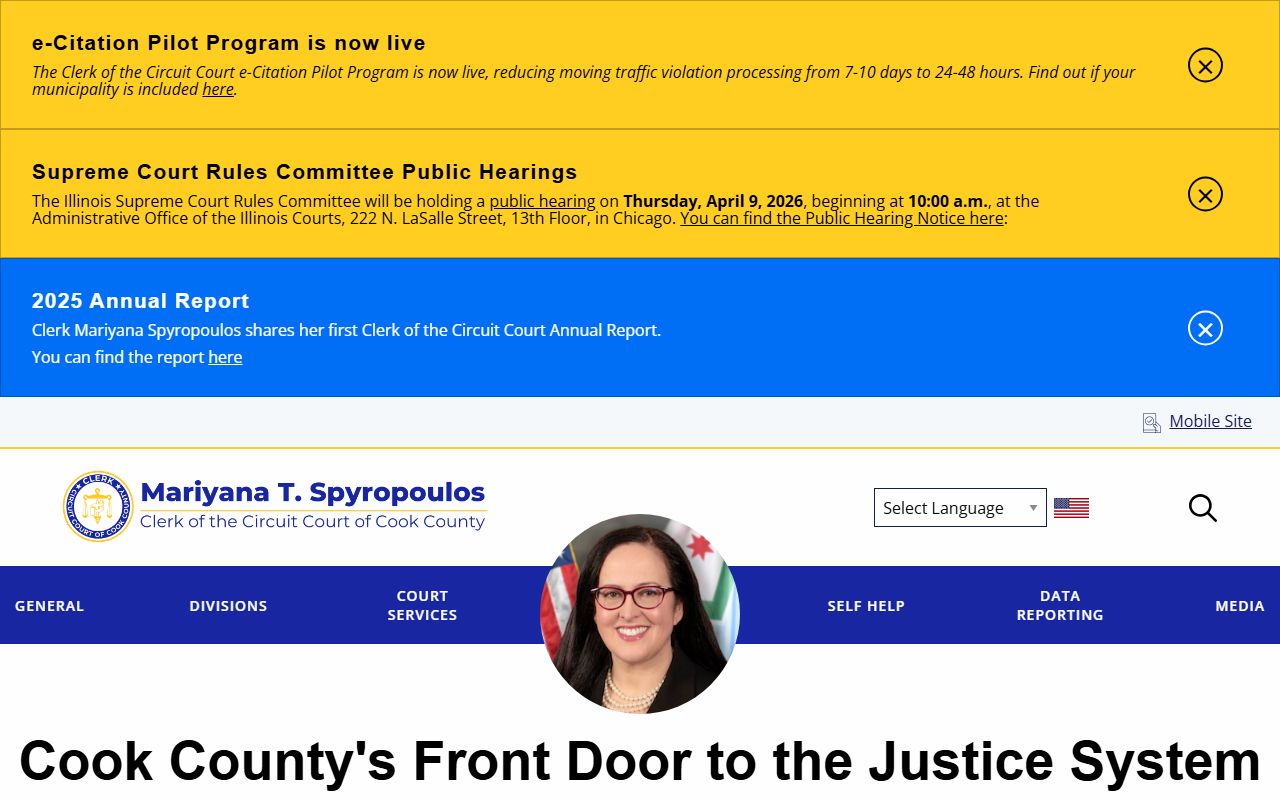
Copy fees at the clerk's office are $2 per page for the first ten pages. Pages 11 and up cost $1 each. A certified copy adds $2 to the total. Exemplified copies start at $15. E-filing has been required in Cook County since July 1, 2018, so newer cases have digital records that are easy to pull up. Older case files may need a trip to the courthouse.
| Office | Cook County Circuit Court Clerk |
|---|---|
| Address |
Richard J. Daley Center 50 W. Washington St. Chicago, IL 60602 |
| Phone | (312) 603-5030 |
| Court Divisions | Chancery, County, Criminal, Domestic Relations, Juvenile, Law, Municipal, Probate, Traffic |
| Suburban Locations | Bridgeview, Markham, Maywood, Rolling Meadows, Skokie |
Cook County Vital Records for People Search
Vital records are another strong tool for finding people in Cook County. The Cook County Clerk, Karen A. Yarbrough, runs the Vital Records Division at 118 N. Clark St., Room 500, in Chicago. This office issues certified copies of birth, death, marriage, and civil union certificates. These records can help confirm a person's identity, trace family connections, or verify life events.
Birth certificates cost $15 for the first copy and $4 for each extra. Death certificates run $17 for the first copy and $6 for extras. Marriage certificates also cost $17 for the first and $6 for each one after that. Birth records are usually available six to eight weeks after the birth takes place. Records older than 75 years may need to be pulled from the State Archives or requested through the Cook County Clerk's Office. Marriage records in Cook County go all the way back to 1871. That makes them useful for genealogy and historical people searches.
The Vital Records Division has separate hours for walk-in and mail requests. Call the main office at (312) 603-5030 or the archives line at (312) 603-6329 for help. Under the Illinois Vital Records Act (410 ILCS 535), certain vital records have access rules. Birth records, for example, are only available to the person named, their parents, legal guardians, or someone with a court order. Death and marriage records are more open to the general public in Cook County.
Note: You can also order vital records online through VitalChek, but service fees apply on top of the standard rates.
Property Records in Cook County
Property records tie people to real addresses. The Cook County Assessor, Fritz Kaegi, keeps data on about 1.8 million parcels across the county. This office handles property valuations, which are public record. You can search by owner name or by property address to see who owns what in Cook County. The assessor divides the county into three assessment districts: Chicago, North Suburbs, and South Suburbs.
Visit the Cook County Assessor website to start a property search. The site shows ownership details, assessed values, tax history, and exemptions for each parcel. The data is free to access and updated regularly.
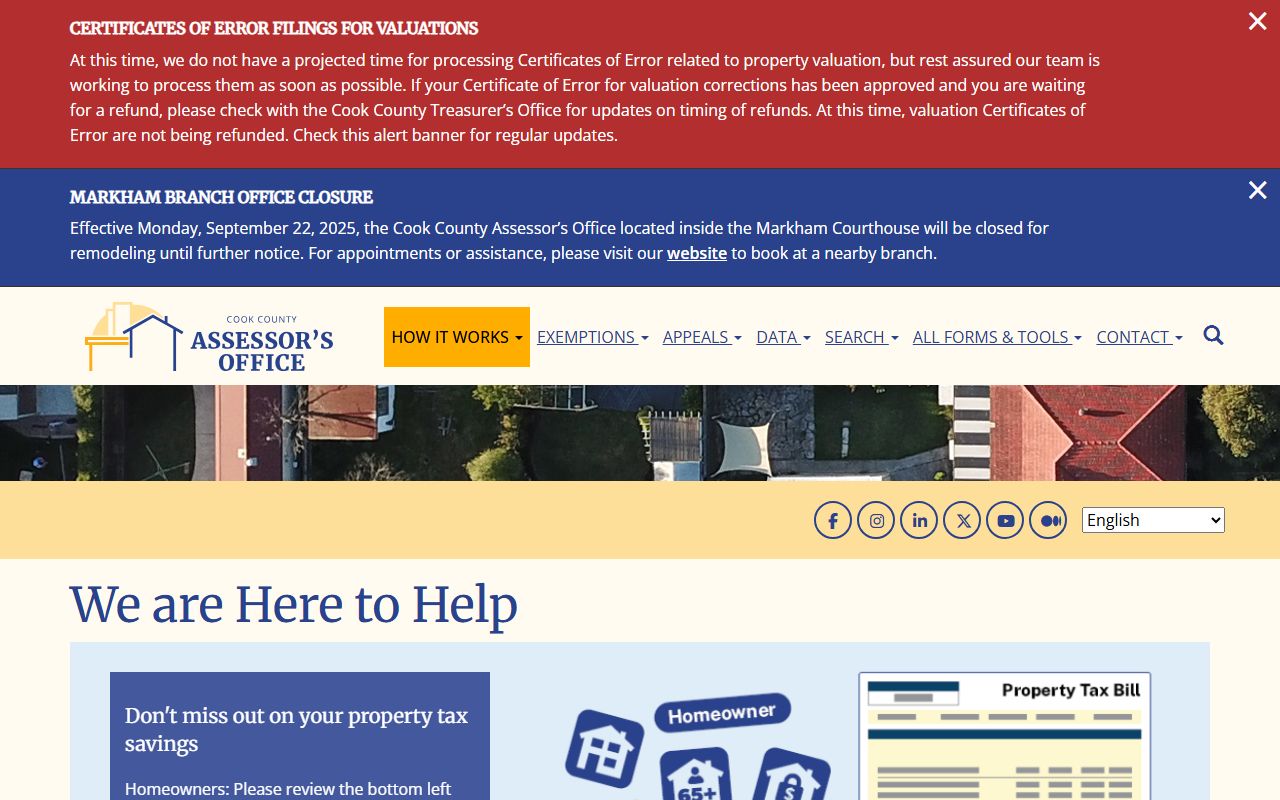
Homeowners in Cook County can claim several exemptions that show up in these records. The Homeowner Exemption is worth up to $10,000 in assessed value reduction. The Senior Exemption goes up to $8,000. Disabled Veterans can get up to $100,000 off their assessed value. These exemptions appear in the property record and can help you confirm whether someone lives at a given address and their general situation. The exemptions page has full details on each one.
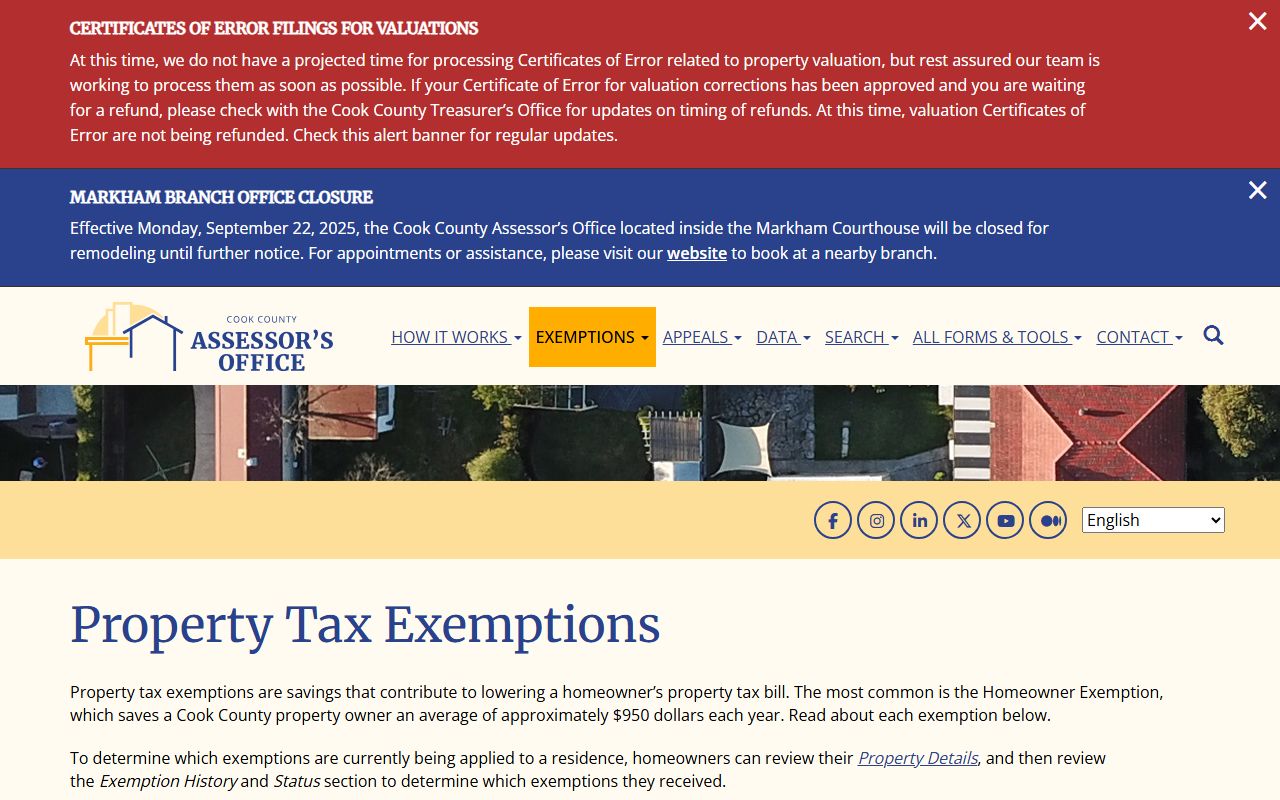
If someone disagrees with their property assessment, they can file an appeal. The appeals process is also public. You can look up who filed an appeal and the outcome. This is another way to connect a person to a property in Cook County.
The Cook County Recorder of Deeds was consolidated into the County Clerk's office in December 2020. Land records going back to 1985 are available online at the clerk's office, located at 118 N. Clark St., Room 120. You can search deeds, mortgages, liens, and other land documents by name. The office also runs a free Property Fraud Alert service that notifies owners if a document is recorded against their property. Call (312) 603-5050 for help with land records.
Cook County Inmate and Offender Search
The Cook County Sheriff, Thomas J. Dart, runs the largest sheriff's office in the country. More than 6,500 people work there. Cook County Jail holds roughly 5,000 detainees at any given time, and the inmate roster is searchable online. The data updates every hour. This makes it a useful tool if you need to find out whether someone is currently in custody in Cook County.
Go to the Cook County Sheriff inmate search to look up a person by name. Results show the inmate's booking date, charges, bond amount, and next court date. The Civil Process Division of the sheriff's office also serves about 200,000 court documents each year. Those service records can help confirm that a person was served with a lawsuit, eviction notice, or other court papers in Cook County.
For people who have been through the state prison system, the Illinois Department of Corrections runs an offender search tool. This covers anyone sentenced to state prison, not just Cook County cases. You can search by name or IDOC number. The Illinois Sex Offender Registration Act (730 ILCS 150) also requires a public registry. You can check that database to see if a person in Cook County is listed.
The VINE victim notification system is another state resource. It alerts you when an offender's custody status changes. This works for Cook County Jail and state prisons.
Note: Inmate search results only show people currently in custody or recently released from Cook County Jail.
How to Search Cook County Public Records
Cook County gives you several ways to search for people. Online tools are the fastest. Most agencies have free search portals on their websites. You can search from home at any hour. In-person visits work best when you need certified copies or want to see a full case file. Some records are only on paper, especially older ones.
The Illinois Freedom of Information Act (5 ILCS 140) gives you the right to request public records from any government body in the state. Cook County agencies must respond within five business days. You can submit a FOIA request in writing, by email, or through an online portal. There is no fee for the request itself, but agencies can charge for copies. The first 50 pages of black and white copies are free under FOIA. After that, the cost is 15 cents per page.
Here is a quick list of the main search tools for Cook County:
- Circuit Court Clerk case search for court records
- County Clerk vital records for birth, death, and marriage data
- Assessor's website for property ownership lookups
- Sheriff inmate search for current jail detainees
- IDOC offender search for state prison records
The eFileIL system is where attorneys and self-represented parties file new court documents in Cook County. While this is mainly a filing tool, it also lets you view case documents once you have a case number. The IDFPR license lookup tool is useful too. It shows whether a person holds a professional license in Illinois. That can add another data point to your Cook County people search.
Cook County Tax and Assessment Records
The Cook County Treasurer, Maria Pappas, collects about $16 billion in property taxes each year. Tax records are public and searchable by owner name or property index number. The treasurer's office sends out tax bills twice a year. The first installment is due on March 1 and the second on August 1. If someone owns property in Cook County, their name will show up in these tax records.
Visit the Cook County Treasurer website to search tax payment history. The site shows whether taxes are paid, how much was owed, and any penalties. You can also see prior years of payment data. This gives you a way to verify that a person still owns a specific property in Cook County or to find out when they stopped paying.
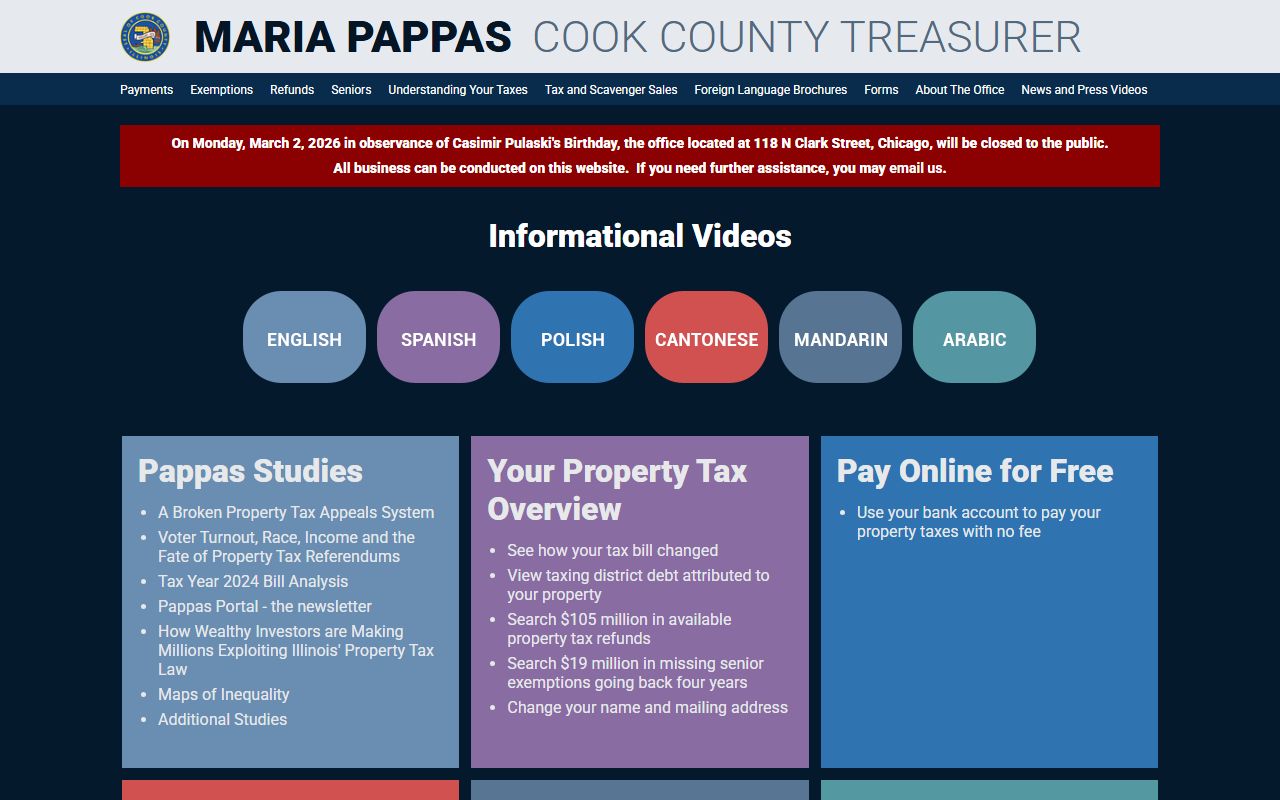
Tax sale records are another resource. When property taxes go unpaid, the county holds a tax sale. The buyer and the original owner are both listed in public records. These sales happen every year and the data is available through the treasurer's website. Scavenger sales for long-delinquent properties also create public records that name the parties involved.
Between the assessor and the treasurer, you can build a solid picture of someone's property holdings in Cook County. The assessor tells you the value and who the assessed owner is. The treasurer shows you the tax bills and payment history. Both are free to search.
Note: Property tax records can sometimes show a prior owner if the records have not been updated after a sale.
Legal Rules for People Search in Cook County
Illinois law sets the rules for which records are public and how you can get them. The Freedom of Information Act (5 ILCS 140) is the main law. It says that government records are open to the public unless a specific exemption applies. Cook County agencies follow this law. You have the right to ask for records, and they must respond in five business days.
Some records have limits. The Vital Records Act (410 ILCS 535) restricts who can get certified birth certificates. Only the person named, parents, legal reps, or those with a court order can get a certified copy. Death certificates and marriage records are less restricted. Court records in Cook County are generally open to the public, but juvenile cases, some family law matters, and sealed records have access limits set by the court.
The Sex Offender Registration Act (730 ILCS 150) requires convicted sex offenders to register with local law enforcement. The registry is public and searchable. This is a tool that many people use as part of a Cook County people search, especially when checking on someone who lives nearby.
Cities in Cook County
Cook County has more than 130 cities, towns, and villages. Chicago is the largest by far, with a population of about 2.7 million. All court cases in Cook County go through the Circuit Court, but suburban districts have their own courthouse locations in Bridgeview, Markham, Maywood, Rolling Meadows, and Skokie. These satellite courts make it easier for people in the suburbs to handle cases without going to downtown Chicago.
Other cities in Cook County include Evanston, Oak Park, Cicero, Orland Park, Schaumburg, Arlington Heights, Des Plaines, Oak Lawn, and Berwyn. These cities do not have their own pages, but all their public records are handled through Cook County offices listed above.
Nearby Counties
These counties border Cook County. If you are searching for someone who lives near the Cook County line, the records you need may be in a neighboring county instead. Each county runs its own court system and record offices.